Home › Ingredients
CinnaShield Ingredients: Ceylon Cinnamon Extract and MCT Oil, Explained
Two ingredients. That is the whole CinnaShield label, and it is worth understanding each one, because the details are exactly where cheap cinnamon products cut corners. Here is what goes into every capsule, what the maker says each part is for, and why those details matter for the afternoons, the cravings and the readings you care about.
Two ingredients, one capsule a day: $33 per bottle when you choose three.
- 33 bottlesBest value · free shipping$33/bottle$99 total
- 22 bottlesMost popular · free shipping$44.50/bottle$89 total
- 11 bottlefree shipping$79/bottle$79 total
The label in one table
| Ingredient | What it is | The maker's role for it |
|---|---|---|
| DNA-verified Ceylon cinnamon extract (12:1) | True cinnamon (Cinnamomum verum) from Sri Lanka, hand-harvested, concentrated | The cell-door opener: helps support the body's own insulin response; polyphenols for everyday oxidative stress |
| MCT oil | Medium-chain triglycerides | The carrier: helps the fat-soluble extract be absorbed |
Ceylon cinnamon extract (12:1)
Ceylon, not Cassia
There are two very different plants sold as "cinnamon". Ceylon, Cinnamomum verum, is often called true cinnamon and comes mainly from Sri Lanka. Cassia is cheaper and is what most supermarket jars contain. Legally, both can be labeled simply "cinnamon", which is why so many people think they have tried the real thing when they have not. The maker of CinnaShield uses Ceylon only, harvested by hand.
Why "DNA-verified" matters
Ground cinnamon all looks alike. Verifying the plant's DNA is how the maker says it confirms that what goes into the capsule is Ceylon and not Cassia or a mix. For you, it removes the guesswork that comes with a jar of powder.
What 12:1 means
A 12:1 extract is concentrated: in simple terms, twelve parts of raw bark go into one part of extract. The maker states that one CinnaShield capsule equals 7,200 mg of raw Ceylon bark. That is far more than you would eat sprinkled on oatmeal or stirred into coffee, which is one of the reasons the maker gives for kitchen cinnamon falling short.
MHCP and polyphenols
The maker names two groups of compounds in the extract. MHCP is the one they connect to the point where insulin meets the cell, the "door" in their key-and-lock picture. The polyphenols, they say, support the body against everyday oxidative stress. Together, these are why the maker calls the extract the cell-door opener.
Where it comes from
The maker sources its cinnamon from Sri Lanka, the traditional home of Ceylon cinnamon, and says it is harvested by hand. True cinnamon comes from the thin inner bark of the tree, which is part of why genuine Ceylon is more expensive than Cassia and why cheaper products so often use the other plant.
MCT oil
MCT stands for medium-chain triglycerides. Its job in CinnaShield is practical. Cinnamon's active compounds are fat-soluble, meaning they dissolve in fat rather than water. Taken dry, or in black coffee, much of what you swallow may pass through. The maker adds MCT oil as a natural carrier so the extract can be absorbed. It is a small detail that most homemade cinnamon routines never consider.
Why the carrier oil is not a minor detail
It is easy to skim past the second ingredient, but the maker treats it as essential. A concentrated extract that your body does not absorb is money spent for nothing. By pairing the extract with MCT oil inside the same capsule, the maker removes the need for you to remember to take your cinnamon with a fatty food, which is something almost no kitchen routine gets right.
What the maker says is not in it
- No drugs and no synthetic hormones.
- No stimulants.
- No artificial dyes.
- No fillers or GMOs.
How it is made
According to the maker, CinnaShield is made in the USA in a GMP-certified facility, and every batch is tested before it ships. Each bottle holds 30 capsules and is labeled a dietary supplement.
How the extract compares with what is in your kitchen
Picture what it would take to copy one capsule at home. You would need to find genuine Ceylon cinnamon and be sure it is not Cassia, which a supermarket label will rarely tell you. You would need a lot of it, since the maker puts the equivalent of 7,200 mg of raw bark into each capsule. And you would need to take it with a fat so it is absorbed, every single morning. One capsule replaces that whole effort, with the same amount every day.
What "dietary supplement" means for you
CinnaShield is sold as a dietary supplement, not a drug. That means no prescription is needed, and it also means it is not designed to replace one. It sits alongside what your doctor has you doing, not instead of it.
Reading the bottle yourself
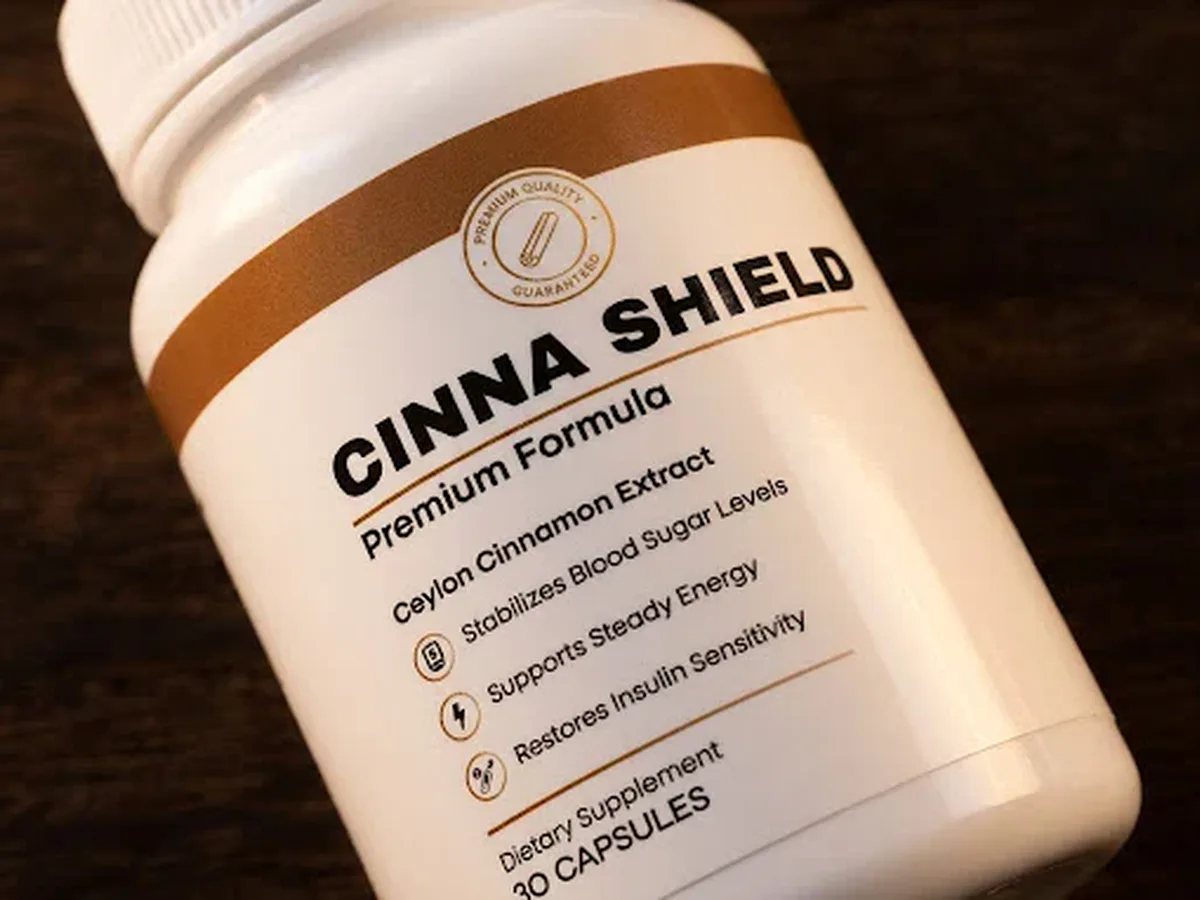
When your bottle arrives, check three things on the label: the name CinnaShield, the words Ceylon cinnamon extract, and 30 capsules. If any of these is missing, or the label lists a different set of ingredients, the bottle did not come from the official order page, and you should contact support@cinnashield.com or the seller who sent it before taking anything.
Why so few ingredients?
Many blood-sugar formulas list a dozen herbs in small amounts. The maker of CinnaShield went the other way: one ingredient at a high concentration, plus the carrier it needs. You know exactly what you are taking, your doctor can read the label in seconds, and there is nothing tucked away in a vague blend.
Questions people ask about the ingredients
People often ask whether the extract tastes of cinnamon; it is sealed in a capsule taken with water, so there is nothing to taste or stir. Others ask why the maker did not add a long list of herbs like many other formulas. The maker's approach is one concentrated ingredient plus the carrier it needs, rather than many ingredients in small amounts. And some ask whether they should keep using cinnamon in food. That is fine for flavor, but a sprinkle is not the measured daily amount in the capsule.
How to take it
One capsule a day, in the morning, with water. No timing around meals. One bottle lasts 30 days. If you take insulin, sulfonylureas or blood thinners, or have liver disease or a medical condition, talk to your doctor first.
Common questions
What are the ingredients in CinnaShield?
DNA-verified Ceylon cinnamon extract (12:1) and MCT oil.
Is the cinnamon in CinnaShield Ceylon or Cassia?
Ceylon (Cinnamomum verum), DNA-verified and hand-harvested in Sri Lanka, according to the maker.
How much cinnamon is in one capsule?
The maker states that one capsule equals 7,200 mg of raw Ceylon bark, as a 12:1 extract.
Why is there oil in CinnaShield?
Cinnamon's active compounds are fat-soluble, so the maker uses MCT oil as a carrier to help absorption.
Does CinnaShield have fillers?
According to the maker, no fillers or GMOs, no stimulants and no artificial dyes.
Know exactly what you take each morning. Two ingredients, $33 per bottle with three, 90-day guarantee.
- 33 bottlesBest value · free shipping$33/bottle$99 total
- 22 bottlesMost popular · free shipping$44.50/bottle$89 total
- 11 bottlefree shipping$79/bottle$79 total